
The Quiet Discipline of Humility
I ChingThis flow traces humility as a practical force that supports difficult work, earns cooperation, and limits the use of arms.
increasing Bearing strength in each event
 decreasing
Bearing strength in each eventdecreasingHumility Follows Abundance

Success Needs a Counterweight
From possessions to restraint
Humility follows Great Havings. Legge says the sequence makes a political and moral point: abundance is best secured through humility.
The strong figure is a single whole line among five divided lines.
Strength that does not boast
The central figure has merit but abases itself. Humility is not absence of ability; it is the discipline that prevents ability from becoming domination.
The theme begins as a corrective to prosperity.
The Superior Man Adds Humility to Humility

Modesty at the Bottom
A quiet beginning
The first line depicts the superior man adding humility to humility. Legge reads the low position as fitting for someone who does not presume to importance.
The attitude is established before power is gained.
Difficult work becomes possible
The text says even a great stream may be crossed with such a quality. Humility enables action because it keeps the actor attentive to danger and other people.
The theme becomes practical: modesty helps someone undertake serious work.
Merit Is Acknowledged Without Arrogance

Ability and Modesty Coexist
Acknowledged achievement
The third line shows a superior man of recognized merit. Legge describes him as able to maintain success to the end.
Humility does not require denying what a person has accomplished.
A good result without self-display
The subject remains fortunate because his strength is held within its proper limits. Merit becomes durable when it is joined to modest conduct.
The line prevents humility from turning into a performance of false self-erasure.
A Poor Ruler Gains Neighbors
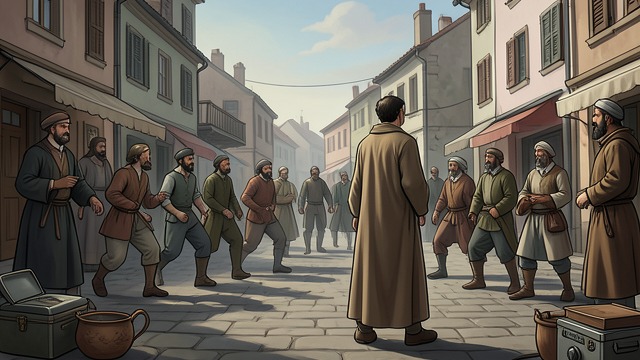
Cooperation Without Wealth
A ruler short of resources
The fifth line says a person who is not rich can still employ neighbors. Legge reads the ruler's humility as a source of cooperation that wealth alone cannot command.
All movement can become advantageous through the right character.
Force remains permissible
Humility does not require abandoning justice. The line allows the advantageous use of arms when circumstances demand it.
The theme distinguishes modesty from weakness or passivity.
Force Is Kept Within Its Proper Sphere
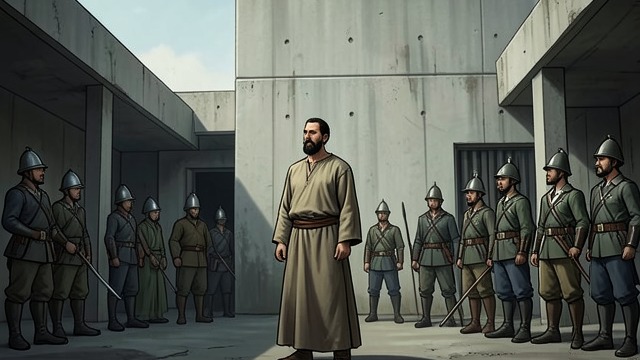
The Limits of Punishment
Armies turn inward
The final line permits the subject to move his forces, but only to punish his own towns and state. Legge interprets the action as correcting internal disorder rather than pursuing aggression.
Humility directs power toward a bounded task.
A resolution without conquest
The line closes by restricting the scope of force. A ruler may need to restore right within his own sphere, but should not use humility as cover for expansion.
The theme resolves in power restrained by responsibility.
At the opening of Humility
At the first line of Humility
At the third line of Humility
At the fifth line of Humility
At the topmost line of Humility
